


 Welcome Back, Builders
This week feels like a turning point.
AI is moving off the cloud, into chips, into conversations, and into real-time experiences that feel almost invisible. Hardware wars are heating up, language barriers are collapsing, and Nvidia is quietly rewriting what “open AI” really means.
Let’s break it down.
 AI News That Matters
🔥 Can Intel Catch Nvidia in the AI Chip Race?
Intel is making an aggressive push to close the gap with Nvidia, betting on new AI accelerators, tighter software integration, and partnerships that target enterprise workloads rather than just hyperscalers.
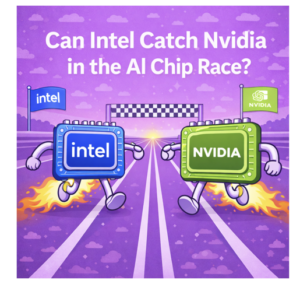
Why it matters: Nvidia still dominates, but customers are desperate for alternatives. If Intel executes well, AI compute could become cheaper, more competitive, and less centralized — a win for startups and enterprises alike.
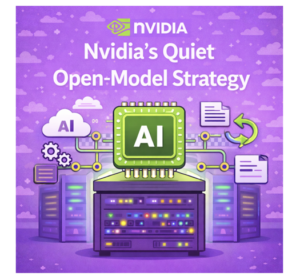
🧠 Nvidia’s Quiet Open-Model Strategy
Nvidia is no longer just selling chips. It’s releasing powerful AI models optimized for its own hardware, blurring the line between infrastructure and intelligence.
Why it matters:
This is vertical integration at its finest. Nvidia isn’t just powering AI — it’s shaping how AI is built, deployed, and scaled.
🌍 Google Unveils Real-Time Speech Translation
Google’s latest AI can translate spoken language live, preserving tone, timing, and context — not just words.
No delays. No subtitles. Just conversation.
Why it matters:
This is the end of language as a barrier. Meetings, travel, customer support, and global collaboration just became dramatically more accessible.
🎧 Real-Time Translation Is the New Interface
This isn’t just a feature — it’s a new interaction layer. AI is shifting from “type → wait → read” to listen → speak → respond instantly.
Why it matters:
Voice becomes the default interface. Screens matter less. Speed matters more. The best AI won’t feel like software — it’ll feel like a person.
💡 Practical Takeaways
1️⃣ If you’re building globally, design for voice first
2️⃣ Expect AI hardware competition to lower costs over the next 12–18 months
3️⃣ Translation, transcription, and summarization are merging into one real-time layer

️ 🌀 Closing Thoughts
The most powerful AI doesn’t announce itself.
It just shows up — understands you — and responds instantly.
That’s where we’re headed.
Stay curious,

AI That Helps 🤖